Vietnam’s 3 A.M. Drug Raids: Tourists Are at Risk. What You Need to Know

Something you legally consumed in Thailand, Canada, or the United States can still cause serious legal trouble after you land in Vietnam.
Read that again.
Legal there does not mean legal here. If Vietnamese authorities detect drugs in your system, even from use before arrival, you may face questioning, testing, administrative action, or a case review under Vietnamese law.
That is not travel paranoia. That is the practical lesson from a late-night inspection in Da Nang that every tourist, expat, digital nomad, and long-term traveler should understand before booking an apartment, hitting a club, or assuming “I’m not carrying anything” means “I’m safe.”

What happened in Da Nang at 3 AM
At 3:00 a.m. on August 1, 2026, approximately 200 police officers and local security personnel inspected SAM Towers and Blooming Towers in Da Nang.
Authorities inspected 210 rooms containing 357 foreign guests.
They administered rapid drug tests to 129 people.
According to reports, one Chinese man reportedly tested positive for ketamine, and one Indian man reportedly tested positive for cannabis.
Police were preparing the cases and said surprise inspections of apartments and rental accommodations would continue.
That last part matters.
This was not described as a one-time show raid. Police said inspections of residential-style accommodations would continue. That includes the kinds of places travelers often choose because they feel private, normal, and separate from nightlife enforcement.
The reports did not explain how people were chosen for testing.
They also did not reveal the final penalties.
So do not jump to the wrong conclusion in either direction. A positive test does not automatically mean deportation, prison, or a blacklist in every case. But it also does not mean “nothing happened.”
Vietnam Drug Raids are a real legal exposure point for foreigners, especially when drug testing is involved.
The U.S. Consulate warning travelers should not ignore
The U.S. Consulate General in Ho Chi Minh City warns that Vietnamese authorities may conduct random searches and on-the-spot drug tests at nightclubs and residential locations.
That is the part many visitors miss.
People expect police attention at a nightclub. They may expect checks in entertainment districts. They may not expect a knock at an apartment door in the middle of the night.
But the warning includes residential locations.
That means hotels, serviced apartments, rentals, and long-stay accommodations can become places where police check documents, registration, drugs, or compliance with local rules.
If Vietnam is your home base for a month, six months, or a year, this is not abstract. It affects how you party, how you travel between countries, what medications you carry, and how carefully your accommodation handles registration.
The Legal Cannabis Trap Travelers May Not See Coming
Here is the trap.
Cannabis may be legal or tolerated where you came from. That could be Thailand. It could be Canada. It could be a U.S. state such as California, Colorado, Washington, or New York.
Vietnam does not have to care.
Presence Equals Violation.
If drugs are detected in your system in Vietnam, authorities may treat that presence as a drug-related violation, even if the drug was consumed legally before you entered Vietnam.
That is the dangerous gap between traveler logic and local enforcement logic.
A traveler thinks:
“I did it legally before I flew in.”
Vietnamese authorities may ask:
“Is it in your system now?”
Those are not the same question.
Cannabis can remain detectable after use. Detection windows vary based on the type of test, frequency of use, body chemistry, and other factors. Ketamine and other substances also carry serious legal risk. The point is simple enough without pretending every case is identical.
If you test positive in Vietnam, the fact that use happened somewhere else may not protect you from legal consequences.
This is especially risky for travelers doing a Southeast Asia circuit. Thailand one week. Vietnam the next. A relaxed beach party, then a flight to Da Nang, Hanoi, or Ho Chi Minh City.
That legal night can follow you across the border.

Testing positive is not the same as possession
This distinction matters.
Testing positive means authorities found evidence of a substance in your body through a test. Possession means authorities found drugs or controlled substances on you, in your bag, in your room, or otherwise linked to you.
Both can create legal problems.
But they are not the same situation.
A positive test may lead to:
Being questioned by police
A written record or case file
Administrative penalties
Immigration consequences
Further investigation
Possible detention while authorities review the case
Possible deportation, depending on the facts and legal handling
Possession can be more serious because it involves physical evidence. Depending on the substance, quantity, and circumstances, possession, distribution, or trafficking allegations can carry severe criminal penalties in Vietnam.
Do not blur the two.
Also do not assume a clean room protects you if you recently used drugs elsewhere.
No drugs in your pocket are good. It may not be enough if a test comes back positive.
What consequences could travelers face
Vietnam takes drug offenses seriously. Foreigners are not exempt because they are tourists, English teachers, retirees, remote workers, or “just passing through.”
Possible consequences can include:
Police questioning
You may be asked where you used the substance, who you were with, where you are staying, and whether you possess anything illegal.
Temporary detention or delayed movement
Authorities may require you to remain available while they prepare or review a case. Travel plans can fall apart fast if your passport, status, or mobility becomes part of the process.
Administrative penalties
Some cases may be handled administratively, depending on the facts. That does not mean the experience is minor. Administrative action can still affect your stay and future dealings with immigration.
Immigration consequences
A case may affect your visa, temporary residence status, ability to extend, or ability to remain in Vietnam. Deportation is possible in some situations, but it should not be treated as automatic for every positive test.
Criminal investigation
If police find drugs, suspect distribution, or believe more serious conduct occurred, the matter can become much more serious.
Embassy or consulate involvement
U.S. consular officials can provide a list of local lawyers, contact family with permission, and visit detained U.S. citizens in some situations. They cannot get you out of jail, override Vietnamese law, or make charges disappear.
That last sentence is not meant to scare you. It is meant to remove a dangerous myth.
Your passport is not a force field.
Apartment inspections raise the stakes for long-term travelers
The Da Nang inspection matters because it happened at residential towers.
Long-stay travelers often get comfortable in Vietnam. They rent a studio. They learn the coffee shop routine. They make friends. They stop feeling like tourists.
That comfort is one of the best parts of living abroad.
It can also make people sloppy.
Vietnam has rules around residence registration. Foreigners staying in Vietnam are generally expected to be registered at their place of stay. Hotels usually handle this. Serviced apartments and landlords should handle it too, but travelers should not assume it is always done correctly.
If police inspect a building, they may check who is staying there, whether foreigners are registered, and whether the property is complying with local requirements.
That can become awkward fast if:
You are staying in someone else’s apartment unofficially
Your host never registered your stay
Your visa status is messy
Your passport details are not on file
You moved apartments and never updated anything
You are present during a drug inspection
Residence registration is not the same as drug enforcement. But inspections can bring multiple issues into one room at the same time.
Keep your stay clean on every front.

Restricted medications can also create problems
Do not focus so much on cannabis that you ignore medication.
Some prescription drugs that are commonly used in the United States may be restricted, controlled, or questioned in Vietnam. This can include certain medications for pain, anxiety, sleep, ADHD, and other conditions.
The safe move is not to guess.
Before traveling, check current rules through official Vietnamese sources, your airline if relevant, and your nearest Vietnamese embassy or consulate. If you take prescription medication, carry it properly.
Smart precautions include:
Keep medication in original pharmacy packaging
Carry a copy of the prescription
Bring only a reasonable personal-use amount
Pack a doctor’s note when appropriate
Do not carry medication for someone else
Do not mix loose pills in unmarked bags
Check whether your medication contains controlled ingredients
Do not assume that “my doctor prescribed it” ends the conversation.
A legal prescription at home helps explain the medication. It does not automatically make every drug legal to import, carry, or use in another country.
How travelers can protect themselves in Vietnam
This is not complicated, but it does require discipline.
Do not use cannabis or illegal drugs before entering Vietnam if there is any chance, they could still be detected.
That is the cleanest rule.
If you plan to visit Vietnam, stop treating the previous country’s drug laws as relevant once you cross the border. Vietnam’s rules are the ones that count in Vietnam.
Do not carry drugs into Vietnam.
This should be obvious, but people still take absurd risks with vape cartridges, edibles, powders, pills, and “just a little” stash from another country.
Airport arrival is not the place to discover how serious Vietnam is.
Avoid rooms where drugs are being used.
If others in your apartment, villa, hostel room, or party space are using drugs, leave. You do not want to explain what belonged to whom during a police inspection at 3:00 a.m.
Keep your accommodation legal and registered.
Use hotels, serviced apartments, or rentals that properly register foreign guests. Ask if registration has been completed, especially for monthly rentals or informal stays.
Carry ID and immigration documents responsibly.
Have access to your passport, visa information, temporary residence card if applicable, and your accommodation details. Do not hand over your passport casually to strangers but do know where it is.
Be careful with nightlife.
The consulate warning specifically mentions nightclubs and residential locations. Nightclubs can involve random searches and on-the-spot tests. If a venue feels risky, leave before it becomes your problem.
Do not argue during an inspection.
Stay calm. Ask for clarification. Follow lawful instructions. If detained or accused, ask to contact your consulate and a local lawyer.
Get local legal help fast if something happens.
Do not rely on Facebook groups, hostel rumors, or someone who “knows a guy.” Vietnam’s legal process is not the place for amateur advice.
This article is informational only. It is not legal advice. If you face a police matter in Vietnam, contact a qualified local attorney and your embassy or consulate.
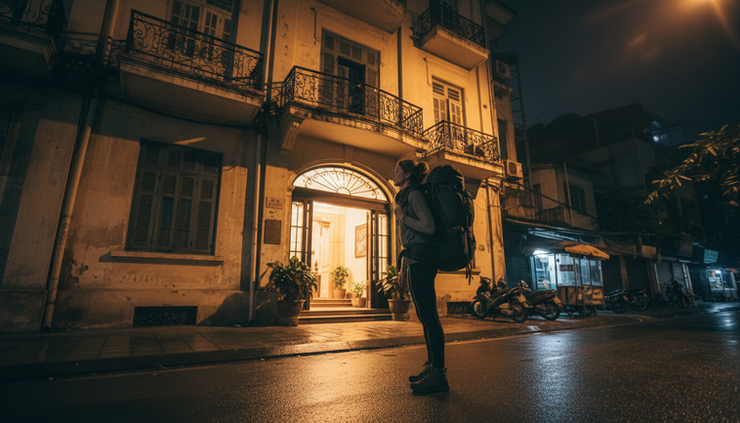
Final Thoughts
The Da Nang operation proved that Vietnam’s drug enforcement does not stop at nightclubs or airports. Authorities inspected two luxury apartment buildings at 3:00 a.m., where 357 foreign guests were staying, and administered rapid drug tests to 129 people. Two foreign nationals reportedly tested positive.
According to Vietnamese news reports citing Hải Châu Ward Police, surprise inspections of apartments and rental accommodations will continue in Hải Châu Ward.
The U.S. Consulate General in Ho Chi Minh City has also warned that Vietnamese authorities may conduct random searches and on-the-spot drug tests at nightclubs and residential locations.
The most dangerous mistake travelers can make is believing that legal drug use in another country cannot follow them into Vietnam. The U.S. Department of State warns that travelers can be arrested and charged if drugs are detected in their systems, even when they were consumed legally before entering Vietnam.
Australia’s official Smartraveller advisory gives travelers the same warning.
That legal night in Thailand could become a very illegal problem after you cross the border into Vietnam.
Enter Vietnam clean. Stay away from drugs while you are there. Keep your medications documented and make sure your accommodation has properly registered your stay.
Would these residential drug checks make you reconsider visiting Vietnam, or do you believe travelers simply need to understand and respect the law?


Comments